Healthy Eating for Families: Simple Ways to Make Real Food Fun and Easy

Healthy eating doesn’t need to be complicated, restrictive, or time-consuming. Often, the most nourishing choices are also the simplest ones.
For families, especially those navigating pregnancy, postpartum recovery, and the busy years of raising children, small shifts toward whole foods can make a meaningful difference. It isn’t about perfection. It’s about creating an environment where nourishing food is accessible, enjoyable, and part of everyday life.
These ideas can help make healthy eating feel more natural, more fun, and far easier to maintain long term. Many of these practices are also part of the broader approach to maternal wellbeing I share in my book Nourished Mama, where I explore how mothers can restore energy and nourish themselves during pregnancy and postpartum. I also discuss many of these ideas in several episodes of my podcast Wild and Well, where I explore how mothers can truly thrive.
Start With Real Food: Eat Produce Instead of Products
A simple starting point is choosing foods that come from nature rather than a package. Focus on filling your plate with plants and reaching for plants as snacks whenever possible.
- Think apple instead of apple juice or apple-flavoured crackers.
- Instead of a bag of chips, reach for rice cakes with avocado and cashew cheese spread on them.
- Swap a packaged store-bought muffin for local sourdough bread.
- Instead of a handful of candies, grab some frozen cherries that are naturally sweet.
Small shifts like these help make real food the default choice.
Choose Local and Organic Foods When You Can
Challenge yourself to source some of your produce and meats from biodynamic and restorative farmers. If that feels like too big a step right now, start with one small swap at a time. When your current vegetable oil runs out, choose an organic olive oil or ghee. Or swap one conventionally grown (pesticide-sprayed) vegetable for an organic option the next time you are at the grocery store. Grocery stores are continuing to sell more organic food options. As we demand better, they provide better.
Grow Your Own Food and Get Kids Involved
Start small. A few herbs on the windowsill or some tomatoes in the yard can be a wonderful beginning. Kids often love gardening, even the little ones. Getting their hands dirty in the soil and nurturing a plant as it grows can be incredibly rewarding. It is also one of the best ways to encourage children to eat vegetables.
When they feel involved in growing something, they are proud of the eventual crop. Given a chance, my son and his little friends will happily devour an entire row of tomatoes. These kids aren’t unique in this.
Teach Kids Where Food Comes From
I get my local produce at the farmer’s market on Thursdays. If I miss it, we take the kids to the Sunday morning market down by the harbour. It has a jumping pillow and fresh juices, so it is always a hit.
I love when the kids help pick out our fruit and vegetables. They sometimes get samples too and taste all sorts of things during a visit – organic cookies, dragon fruit and broccoli sprouts.
There is no doubt that having a garden is one of the best ways to get kids to eat vegetables. Yet taking them shopping and letting them pick some of the food is a great runner-up. We all like autonomy.
Get to know your butcher and find out where your meat comes from and which cuts are best for slow cooking, collagen-rich broths and nourishing meals. Get to know the farmers where your produce comes from and visit farmers’ markets when you can.
Local markets continue to grow bigger each year, making it easier to find excellent quality food that is delicious. You might also join a local food cooperative or find a service that sources and delivers local organic food. There are more and more of these each year as demand for healthy local food increases.
Cook More Meals at Home as a Family
Spending more time in the kitchen can support everyone’s health.
Meal planning and prep days can help make cooking an enjoyable task rather than a daunting one. Getting the whole family involved can also make a big difference. Just like gardening, when children help cook or bake, they are far more likely to eat what they create.
And who knows, maybe someday they will be making nourishing meals for you in return.
One of my favourite ways to spend time with my boys is in the kitchen creating nourishing food together. They scoop, pour and mix everything together as best they can. The mess is always worth it, and I suspect I am teaching them an appreciation for wholesome home-cooked meals.
For those who are not fans of cooking, consider simple strategies such as cooking only part of a meal, asking your partner to take on more of the cooking or finding local cafés or catering companies that prepare wholesome meals you can enjoy at home.
How Cooking Together Helps Kids Love Healthy Food
One of my son’s favourite morning activities is spending time in the kitchen with me creating. He sits on the barstool. Or, let’s be honest, sometimes on the kitchen counter, while I gather ingredients for a healthy cookie recipe or some bliss balls. He scoops, adds and mixes everything together as best a three-year-old can.
Yes, the tidy kitchen from the day before quickly disappears, but I cherish these quiet mornings creating with him. He has joined me in the kitchen since he was born. When he was very young, he would sleep in the baby carrier while I moved about making dinner. As he got older, I would put the bowl on the floor and squat down to his level as we poured and mixed together.
It certainly was not always a calm experience with him in the kitchen, but it is something we share, and the mess is almost always worth it, especially if someone else is cleaning up. More importantly, it is teaching him an appreciation for a healthy, home-cooked meal.
Eat With Intention and Slow Down at Mealtimes
Take a moment to breathe slowly, give thanks for your food or simply pause before eating. Then eat slowly, ideally while seated. Chew your food well. You might notice a trend here. Slow it down.
I know this can sound difficult when babies are crying and kids are vying for your attention. But even one big exhale before your first bite can help your body digest food more effectively so you receive more of the benefits from your meals. Vitality often grows from small, intentional acts repeated over time. This is also beautiful role modelling for children, showing them that food can be appreciated and enjoyed calmly.
Why Warming Foods Support Postpartum Recovery
Nourishing meals remain a central feature of my week, even well past the fourth trimester.
Warmth is one of the four foundations of postnatal care across many traditional cultures. We often think of warmth through blankets, socks and warm clothing, but it can also come from the foods we eat.
Foods that are warming and easy to digest can help new mothers restore their energy and support healing. Even when mothers are struggling months or years after birth (which many are) these foods can still support recovery. Soups, broths, teas, curries and stews are wonderful options. They are also ideal to cook in large batches so you can freeze leftovers and have a quick, warming meal ready later.
Healthy Eating Habits That Nourish the Whole Family
Healthy eating does not have to be rigid or overwhelming. It can be joyful, communal and deeply nourishing. When we focus on real foods, involve our children in growing and preparing meals, support local producers and slow down enough to truly enjoy eating, we begin to build lasting habits that support the whole family.
These small daily choices add up to something powerful: a home culture where food nourishes both body and connection.
If you would like more support in nourishing yourself through motherhood, you can explore my book Nourished Mama or listen to my podcast Wild and Well, where I share more conversations about thriving, not just surviving, through the motherhood journey.
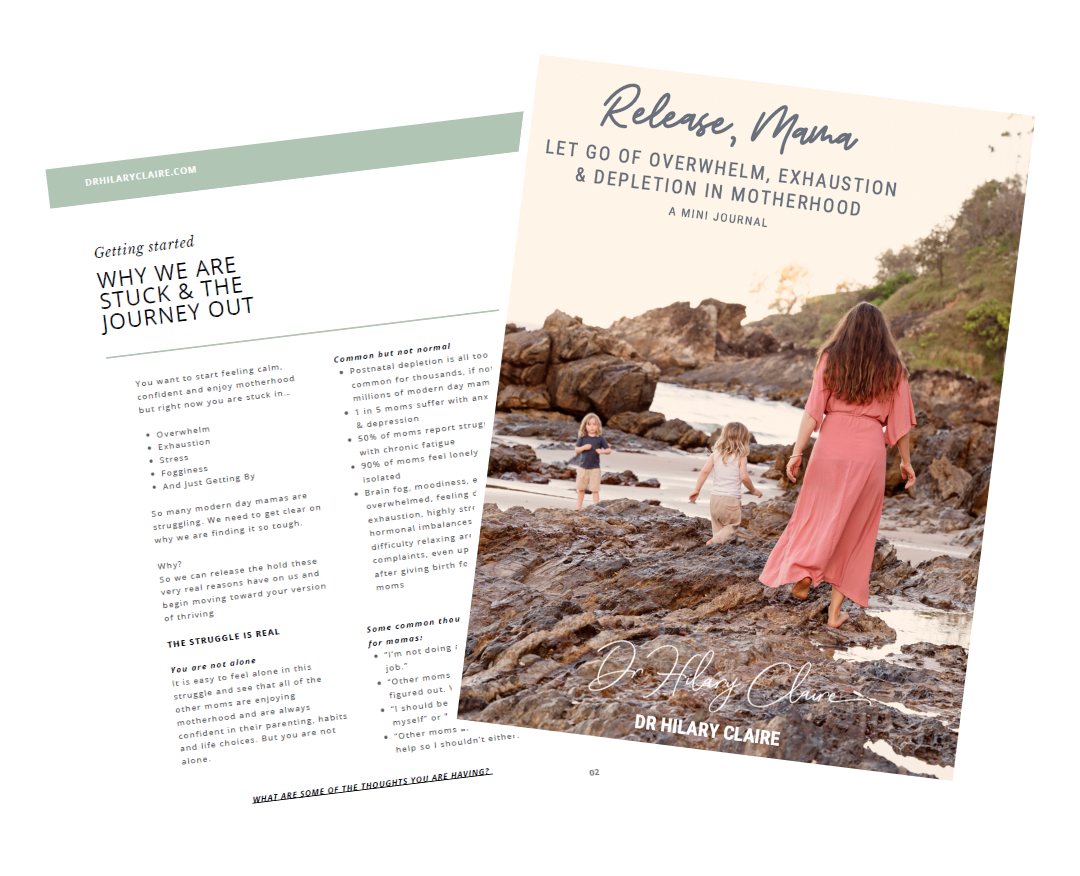
Release, Mama Mini-Journal
In this mini journal, you will identify your unique reasons for struggling with exhaustion, overwhelm, guilt or burnout. Then you will be guided in letting these go and taking effective action to create a future that makes it easier for you to thrive.
Start living motherhood on your own terms.

50% Complete
Keep Up-To-Date
For a regular dose of useful resources and articles from Dr Hilary Claire delivered straight to your inbox pop your details below.