Sunshine and Vitamin D: Boost Energy and Postpartum Health

Sunshine and Vitamin D Benefits for Postpartum Health
Sunshine does a lot more than just brighten your day. It is critical for your brain and body, particularly for new moms navigating postpartum recovery and motherhood burnout. Exposure to sunlight increases vitamin D and BDNF, improves gut microbiome health, strengthens the immune system, decreases anxiety, and helps with melatonin and serotonin production. It also improves mood, lifts your energy during the day, supports restful sleep at night, and helps regulate circadian rhythms. Not only do we benefit from exposure to daylight, but we actually require it for our bodies to work optimally and stave off mental and physical health issues.
Vitamin D and sunshine exposure on our skin and eyes can increase serotonin (the “happy neurotransmitter”) and boost your skin and hormone health. Serotonin helps regulate mood, promotes contentment, and aids in sleep and digestion, all things that vibrant, thriving mothers need.
Sunlight and Sleep for Maternal Wellbeing
One of the biggest benefits of exposure to daylight is better sleep. With improved sleep comes countless benefits for maternal wellbeing, energy, and mood. Exposure to sunlight during the day is also critical for keeping your circadian rhythms on track, keeping you happy, alert, and energized, and preparing your body for restorative sleep at night.
Getting early morning sunlight on your eyes is one of the easiest ways to reset this rhythm. A little sunshine during the day can give you an energy boost like no coffee can. Seeing the sunset in the evening helps your brain recognise that night is coming and prepares your body for high-quality rest. This is a fabulous short and simple (not always easy though) microshift to boost your vitality.
Unfortunately, blue light from technology, lighting, and appliances can disrupt this natural inbuilt clock. Limiting exposure to blue light at night and getting natural daylight during the day can significantly improve your energy levels, supporting both postpartum recovery and maternal wellbeing.
How Much Sunlight Do We Need?
In recent decades, we spend far too much time indoors, receiving minimal sun exposure. Some scientists suggest that at least two hours a day of daylight gives your mental wellbeing a noticeable boost. Even a few minutes of sun exposure to larger areas of your body, like your thighs or belly, can be beneficial.
It’s important to be reasonable. Excessive exposure or sunburn won’t help. Factors such as genetics, skin tone, diet, location, altitude, smog, ozone levels, and seasons all influence how much sunlight is ideal. When outside for extended periods, seek shade, wear protective clothing and a hat, and use safe sunscreen.
Safe Sun Practices for Moms
While some dermatologists warn against sun exposure, there is growing evidence that moderate, safe sunlight can be beneficial. A little sunshine is good for us, especially when combined with a healthy lifestyle. You can also enjoy indirect daylight through walks, sitting under trees, or spending time in sunlit rooms with large windows.
Dr. Masson notes that vitamin D supplementation can be helpful during winter months or if levels are low, but she also encourages safe sun exposure whenever possible.
Bringing It Together for Intentional Motherhood
Whether you are taking a short morning walk, sitting under a tree with your little one, or enjoying daylight from your home’s windows, sunlight is a simple yet powerful tool to support energy, mood, and thriving motherhood. Pair this with intentional habits like small lifestyle shifts, explored in my book, Nourished Mama, to create lasting wellbeing. You can also explore more practical strategies in my articles on the forgotten art of play for moms and micro-shifts for a vibrant life, and tune into my podcast Wild and Well for weekly tips and inspiration.
References
Aranow, C. (2011). Vitamin D and the immune system. Journal of Investigative Medicine: The Official Publication of the American Federation for Clinical Research, 59(6), 881–886. https://doi.org/10.2310/JIM.0b013e31821b8755
Brosnan, J. L. (2019). Rhythm Reset. Self-published ebook.
Gajjar, A. (2020). Lifestyle Medicine [Conference Session]. Foundations of Nutritional and Environmental Medicine, Australasian College of Nutritional and Environmental Medicine Part II. https://online.acnem.org/
Kim, J. (2020). Women’s Health and Hormones [Conference Session]. Foundations of Nutritional and Environmental Medicine, Australasian College of Nutritional and Environmental Medicine Part 2. https://online.acnem.org/
Lin, S. (2020, June 23). Vitamin D through sun: 9 tips to optimize your levels. Dr. Steven Lin: The Functional Dentist. https://www.drstevenlin.com/optimize-vitamin-d-through-sun/
Masson, L. (2020). Children’s Health [Conference Session]. Foundations of Nutritional and Environmental Medicine, Australasian College of Nutritional and Environmental Medicine Part II. https://online.acnem.org/
Mercola, J. (2020, September 21). Optimize your vitamin D levels by simply getting some sunlight. Mercola: Take Control of Your Health. https://www.mercola.com/calendar/2018/vitd.htm
Read, J. (2020). Cardiometabolic Fundamentals [Conference Session]. Foundations of Nutritional and Environmental Medicine, Australasian College of Nutritional and Environmental Medicine Part 1. https://online.acnem.org/
The indoor generation: Facts and Figures. (n.d.). VELUX. Retrieved January 12, 2021, from https://www.velux.com/indoorgeneration/indoor-generation-facts-and-figures
Weaver, L. (2017). Rushing woman’s syndrome. Dr Libby Online.
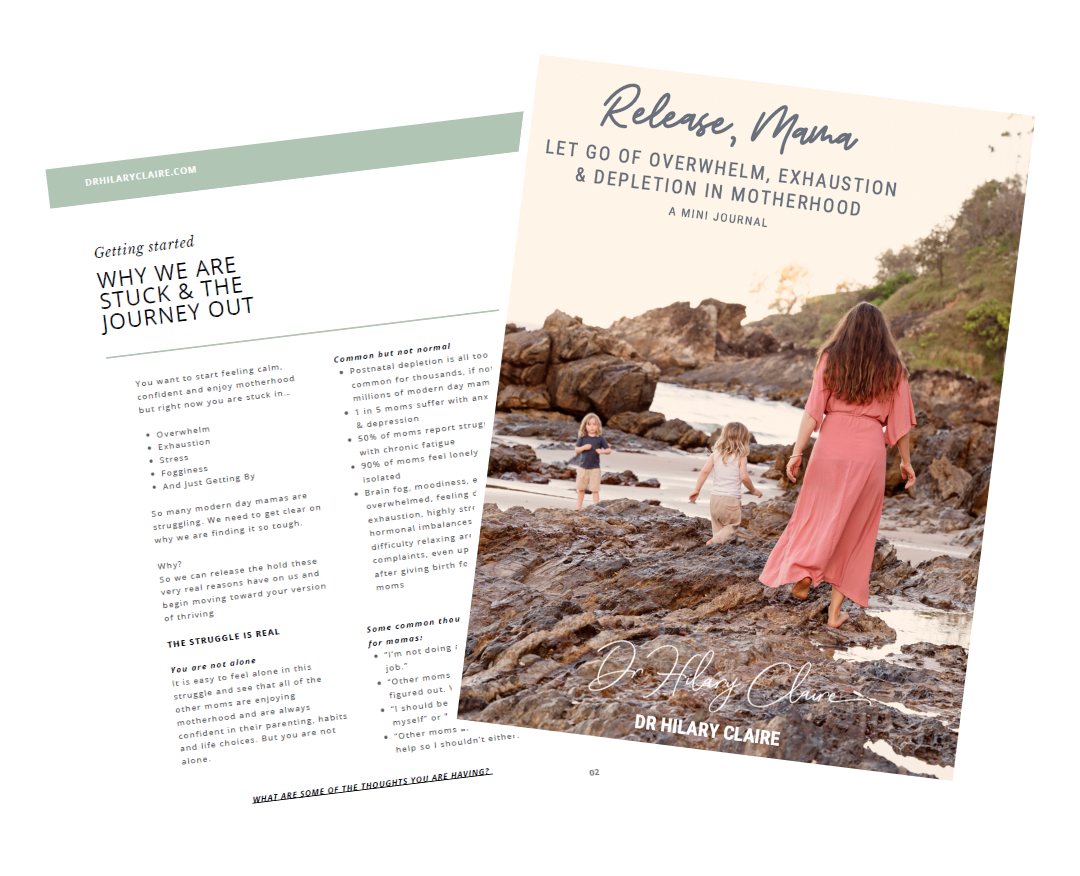
Release, Mama Mini-Journal
In this mini journal, you will identify your unique reasons for struggling with exhaustion, overwhelm, guilt or burnout. Then you will be guided in letting these go and taking effective action to create a future that makes it easier for you to thrive.
Start living motherhood on your own terms.

50% Complete
Keep Up-To-Date
For a regular dose of useful resources and articles from Dr Hilary Claire delivered straight to your inbox pop your details below.